The first time a Brazilian friend handed me her phone to find a photo, I scrolled past her contact list and found myself in it. I was saved as Mike Gringo, filed somewhere between Carla Academia and Zé Pedreiro.
I was mildly offended for about an afternoon. Then I noticed that almost nobody on that list was saved under a plain name. Carla was the one from the gym, Zé was the builder, and I was the foreigner. When you know four Carlas, that's how you keep them apart.
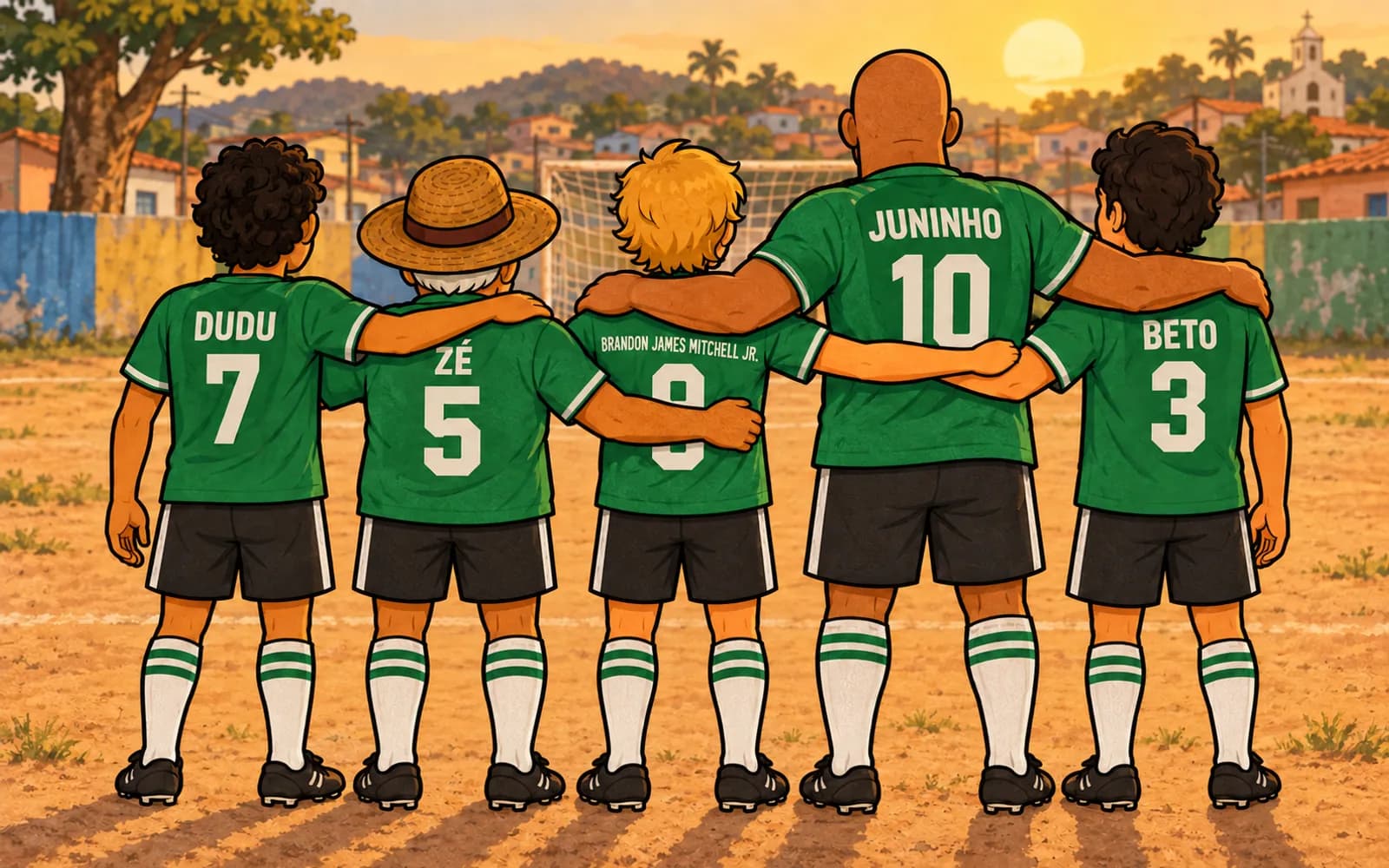
That was my introduction to Brazilian nicknames, and it set the tone: your name on paper is only a starting point. Roberto becomes Beto, José becomes Zé, Eduardo becomes Dudu, and a grown man with a beard and a mortgage answers to Juninho at work. If you're going to live, work or date in Brazil, you'll need to decode these. Sooner or later you'll also be given one.
Why Brazil runs on nicknames
Start with the arithmetic. When IBGE, Brazil's statistics agency, counted first names in the 2010 census, it found about 11.7 million Marias and 5.7 million Josés. With that many people sharing a handful of names, a nickname is often the only practical way to know which Maria everyone is talking about.
The other reason is warmth. Brazilians move to first names quickly, with colleagues, with the doctor, with the bank manager, and a nickname is one more step in the same direction. Using one signals that you're on friendly terms. Sticking to the full name can read as distance, even when you meant it as respect.
The word you need is apelido (ah-peh-LEE-doo), a nickname. These are the lines you'll hear when names come up:
- Como você gosta de ser chamado? — What do you like to be called? (chamada if you're asking a woman)
- Qual é o seu apelido? — What's your nickname?
- Pode me chamar de Beto. — You can call me Beto.
- Todo mundo me chama de Bia. — Everyone calls me Bia.
Look at the last two. The structure is chamar alguém de plus the name, and that small de is the part English speakers tend to leave out.
How Brazilian nicknames are built
There's no single rule, but there are patterns, and most of the nicknames you meet will follow one of them.
| Full name | Nickname | What happened |
|---|---|---|
| Rafael, Gabriela, Carolina | Rafa, Gabi, Carol | Keep the beginning |
| Roberto, Fernando | Beto, Nando | Keep the end |
| Eduardo, Juliana | Dudu, Juju | Take one syllable and double it |
| Carlos Eduardo, Maria Luiza | Cadu, Malu | Fuse a double name |
| Maria Eduarda | Duda | Drop the Maria, shorten the rest |
| Paulo, Ana | Paulinho, Aninha | Add a diminutive |
| José, Francisco, Beatriz | Zé, Chico, Bia | Traditional forms you simply learn |
Compound first names deserve a word of their own. Brazilian parents love them (João Pedro, Maria Clara, Ana Luiza, Carlos Eduardo), and almost nobody says the whole thing out loud. You get Cadu, Malu, Analu, and a generation of boys who are just JP, said zhoh-tah-PEH.
The traditional forms are the ones to memorize, because you can't work them out from the spelling. Zé for José, Chico for Francisco, Toninho for Antônio, Bia for Beatriz. Chico Buarque's birth certificate says Francisco. José turns into Zé so reliably that the Brazilian parrot Disney created in 1942 is called Zé Carioca.
Nicknames also stack. Beto can double into Bebeto, which is how José Roberto Gama de Oliveira became the Bebeto who won the 1994 World Cup with Brazil.
A quick pronunciation note. Zé has an open vowel, like the e in "bed", never "zee". Chico sounds like SHEE-koo, and Dudu is doo-DOO, stressed on the second syllable.
Juninho, Ronaldinho and a man called Ronaldão
The suffix -inho is where learners get confused, because it lands on adults all the time.
Take Juninho. A son named after his father gets Júnior at the end of his name, and Júnior very often becomes Juninho for life. Plenty of Juninhos are past fifty and well over six feet tall.
Football shows another use. Brazil's squad at the 1994 World Cup had two Ronaldos: an experienced defender and a seventeen-year-old striker. The defender became Ronaldão and the teenager became Ronaldinho. The suffixes weren't describing anyone's size. They were a filing system.
The teenager grew up to be simply Ronaldo, the one the whole world knows. So when Ronaldo de Assis Moreira came through a few years later, Brazilians called him Ronaldinho Gaúcho, a gaúcho being someone from Rio Grande do Sul, to keep the two apart. Adding a place is its own pattern: Juninho Paulista and Juninho Pernambucano were two different midfielders, one from São Paulo state and one from Pernambuco.
We covered what -inho and -ão do to ordinary words in our guide to Brazilian Portuguese diminutives. Names follow the same logic. Most of the time it's affection, some of the time it's a way to tell two people apart, and it's almost never a comment on size.
Try it in Falando: the -inho / -zinho choice works on names exactly as it does on nouns. Paulo drops its final -o and becomes Paulinho; Zé keeps its stressed vowel and becomes Zezinho. The A2 diminutive suffixes guide takes you through the rule in a couple of minutes, and after that you can work out Rafinha, Gabizinha and Joãozinho on your own.
One name on the shirt
Here's what surprises visitors most: many of Brazil's best-known footballers play under a nickname, and the nickname is what goes on the back of the shirt.
- Kaká is Ricardo Izecson dos Santos Leite. His younger brother couldn't say "Ricardo" and called him Cacá, and it stuck.
- Dunga, Brazil's captain at the 1994 World Cup, was born Carlos Caetano Bledorn Verri. Dunga is the Brazilian name for Dopey, one of Snow White's seven dwarfs, and he got it as a small boy.
Most of these started exactly like everyone else's nickname: at home, in childhood, long before anyone was famous. Clubs, commentators and eventually the national team simply kept using the name that everyone already used.
It isn't only football. Juscelino Kubitschek, president in the late 1950s, is remembered as JK, and the bridge named after him in Brasília is the Ponte JK.
The nicknames you don't choose
At some point Brazil will give you a nickname without asking first. Most are based on something visible, and most are meant kindly.
Gringo or gringa covers any foreigner. It's usually neutral and often affectionate, which is how I ended up with it in that phone. Alemão goes to anyone fair-haired, German or not. Baixinho is the short one and Magrão the tall, thin one. Where you're from works too: Mineiro, Baiano, Gaúcho. In some cities those get stretched, with "baiano" applied to anyone from the Northeast, and that's where affection starts sliding into stereotype.
Strangers have their own set. The man who watches the cars on your street may call you chefe, patrão or campeão. Children call every adult tio or tia. A shop assistant might call you querido or querida. None of it is personal, and you don't need to answer in kind.
A few ground rules, some of them learned the slightly awkward way:
- Don't invent a nickname based on someone's looks. Gordinho, Japa or Negão might be affectionate between old friends; from a foreigner you just met, they land badly.
- Don't shorten a name nobody has offered you. Listen for what their friends call them, or ask.
- Keep the full first name in a first work email, and switch the day they sign off as "Beto".
- With older people, use Seu for a man or Dona for a woman plus the first name: Seu João, Dona Maria. It's respectful and still on first-name terms.
- If a Brazilian adapts your name, let it go. Mike comes out as something close to MAI-kee, and I stopped correcting it in my second week.
Nicknames sit on the same scale as você, o senhor and a gente, the question of how close you are to the person in front of you. We mapped that scale in our guide to Brazilian Portuguese pronouns.
Xará, fulano and the rest of the name vocabulary
A handful of words turn up whenever names do.
- Xará (shah-RAH) is someone who shares your name. When two Marias meet, one of them will say "Oi, xará!" The word came from Tupi, where xe rera means "my name".
- Fulano, sicrano e beltrano are Brazil's Tom, Dick and Harry. Fulano disse que... means "So-and-so said...".
- Zé-ninguém is a nobody. Zé again, as the default name for anyone at all.
- Sobrenome is a surname. Be careful here: apelido means nickname in Brazil but surname in Portugal, where a nickname is an alcunha. We collected more splits like that one in European vs Brazilian Portuguese.
So, do you already have a Brazilian nickname? If not, what do you think your name will turn into?
Try it in Falando: open Bate-papo, choose Real-life situation and pick Guest at a churrasco. Introduce yourself the Brazilian way, Prazer, eu sou o Robert, mas pode me chamar de Beto, and see how the conversation goes from there. You speak, your partner answers out loud, and nobody minds if you get the de wrong the first time. Bate-papo is premium and included in the free trial.
People also ask
What is a nickname in Brazilian Portuguese?
It's an apelido. To ask for someone's, say Qual é o seu apelido? or, more naturally, Como você gosta de ser chamado? To give yours, say Pode me chamar de... followed by the name.
Why do Brazilian footballers use nicknames?
Most of them got the nickname as children, and it was simply the name everyone already used when they turned professional. With so many players sharing the same first names, a nickname also stops two Ronaldos from being confused.
Is it rude to call a Brazilian by a nickname?
Not if it's the one they use themselves. It's friendly, and it's normal even at work. What can be rude is inventing one, especially one based on someone's looks, or using a nickname you've only heard their closest friends use.
What will Brazilians call me?
Probably your first name adapted to Portuguese sounds, then a shortened or -inho version once people know you, and possibly a descriptive one like gringo along the way. You don't get much say in the matter.
Pode me chamar de...
Brazilian nicknames look chaotic from outside, but most of them follow a small set of habits: cut the name, double a syllable, fuse a double name, add -inho, or tag someone by where they're from. Learn the traditional ones (Zé, Chico, Bia, Toninho), remember that -inho on an adult usually means affection or "the other one", and let the nickname Brazil gives you stick.
Then practise saying it. Falando is a Portuguese learning app built around how Brazilians actually talk, and Bate-papo is the easiest place to rehearse the introduction before you need it at a real churrasco. If you're starting from zero, all of A1 is free when you sign up.
And if someone saves you in their phone as Fulano Gringo, take it as a good sign. It means they plan to call.